
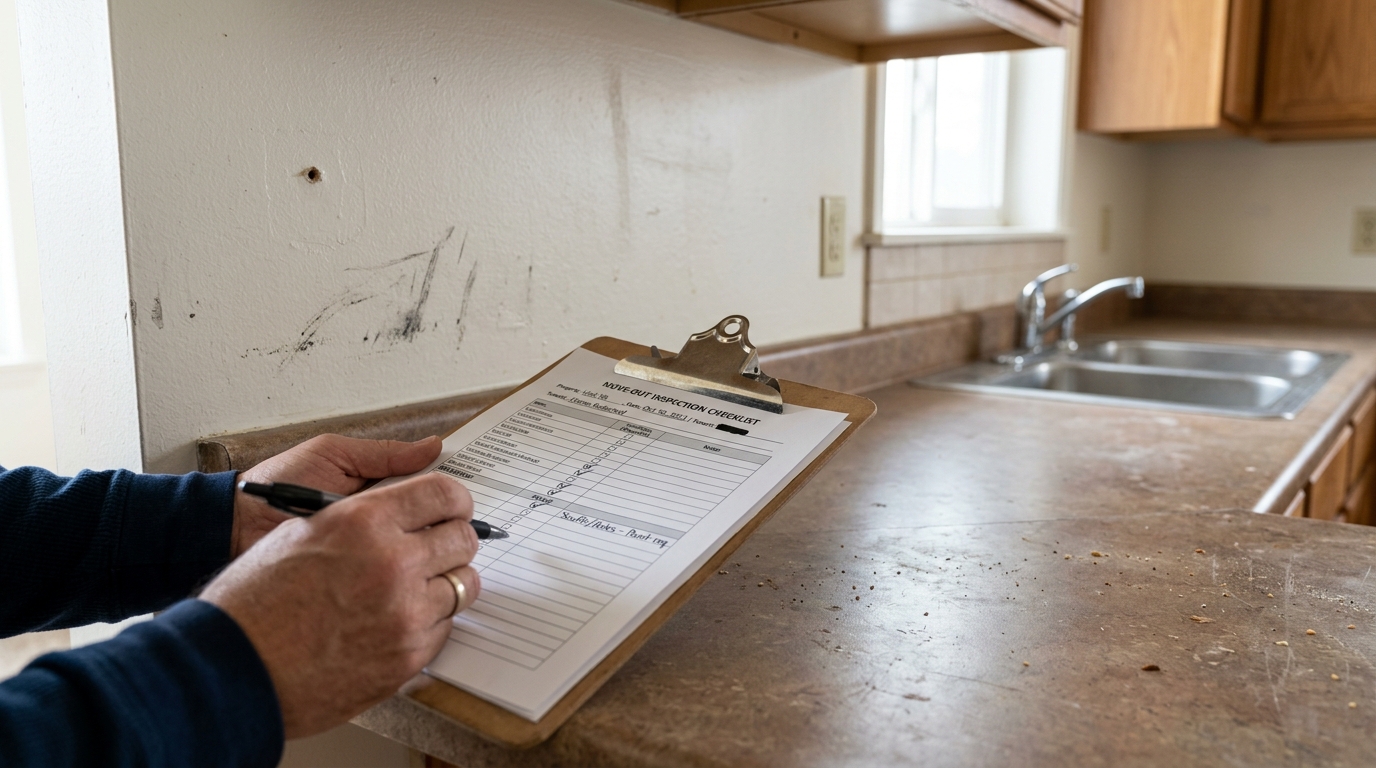
A move out walkthrough is the moment your entire tenancy gets graded. In roughly fifteen to thirty minutes, a landlord walks each room with a clipboard or a phone camera and compares what they see against the condition report you signed on day one. Every scuff, greasy vent, and forgotten closet shelf becomes a line item, and each line item can chip away at the deposit you are counting on. In Ypsilanti and the surrounding Washtenaw County rentals, where student turnover and older housing stock are common, landlords tend to inspect with a sharp eye because they need the unit ready for the next tenant fast. Understanding how they actually look at a space, and where their attention lands first, is the difference between getting your money back and arguing over charges weeks later. The team at Huron Valley Cleaning Collective has cleaned countless end of lease units across the area, and the patterns are remarkably consistent.
Normal Wear Versus Damage Is the First Judgment Call
Landlords are trained, informally or otherwise, to sort every flaw into one of two buckets: ordinary wear and tear or tenant caused damage. Michigan law lets them deduct for the second category, not the first. Faint carpet traffic patterns, a few small nail holes, and lightly faded paint after several years usually count as wear. Burns, pet stains soaked into the pad, crayon on walls, a cracked tile, or a door kicked off its hinge fall into damage. The gray zone is where deposits vanish. A wall with dozens of anchor holes, a bathroom coated in mildew, or a stove that has not been cleaned since you moved in reads as neglect rather than aging, and neglect gets charged.
Because that line is subjective, presentation matters enormously. A unit that is spotless makes a landlord more generous about small imperfections. A grimy unit makes them scrutinize everything and assume the worst about anything ambiguous. Cleanliness is the frame through which the rest of the inspection gets interpreted.
The Rooms Landlords Scrutinize Hardest
Not every room carries equal weight. Landlords spend the bulk of their attention on kitchens and bathrooms because those spaces show wear fastest and cost the most to turn over. A kitchen gets judged on the inside of the oven, the burner drip pans, the range hood filter, the refrigerator seals and drip tray, and the grease film that builds up on cabinet faces above the stove. Bathrooms come down to grout lines, caulk, the toilet base, mineral scale on faucets and glass, and any mildew creeping along the ceiling or window frame.
Bedrooms and living areas draw a quicker but still pointed look: carpet condition, wall marks, closet interiors, window tracks, and blinds. Landlords open closets, check the tops of door frames for dust, and run a finger along baseboards more often than tenants expect. Keeping up with regular maintenance cleaning services throughout your lease means these surfaces never accumulate the kind of buildup that turns a passing glance into a deduction.
The Specific Details That Trigger Charges
Certain overlooked spots show up on deduction lists again and again. They are rarely the obvious things. Tenants remember to vacuum the middle of a room but forget the edges where dust and pet hair collect. They wipe the counter but skip the backsplash and the space between the stove and cabinet.
- Oven interior with baked on grease and burnt residue
- Range hood filter clogged with sticky film
- Refrigerator drip tray, seals, and the coils behind it
- Grout and caulk stained gray with mildew
- Hard water scale on shower glass and faucets
- Window tracks and sills packed with dust and dead insects
- Baseboards, door tops, and ceiling fan blades left dusty
- Cabinet and drawer interiors with crumbs and sticky rings
- Light fixtures and vent covers coated in grime
- Marks, scuffs, and adhesive residue on walls
Each of these is small in isolation, but landlords tally them. Five neglected spots at twenty five to fifty dollars each in cleaning labor adds up to a meaningful chunk of a deposit, and that is before any repair charges enter the picture.
Why a Standard Tidy Up Is Not Enough
The cleaning you do week to week keeps a home livable, but move out inspections demand a different standard. Landlords are comparing the unit to a rent ready baseline, which means every surface should look the way it did when you first got the keys. That involves degreasing, descaling, scrubbing grout, cleaning inside appliances, and reaching the neglected corners that never come up during normal life.
This is where a thorough deep cleaning changes the outcome. Deep cleaning targets the exact buildup landlords hunt for: oven carbon, shower scale, mildew in caulk lines, and the greasy haze on kitchen surfaces. It resets the unit to a condition that reads as cared for rather than merely picked up, and that impression carries weight the moment the walkthrough begins.
How Landlords Document What They Find
Modern landlords rarely rely on memory. Most photograph and often video the entire unit during the walkthrough, timestamping images to build a record they can attach to an itemized deduction letter. Michigan requires them to provide that itemized list within thirty days of your move out if they intend to keep any part of the deposit, so the documentation is not optional for them. It becomes their evidence.
This matters for you in two ways. First, a clean unit gives them fewer photos to build a case around. Second, you should document the unit yourself before you hand over keys, capturing the same rooms and surfaces so you have proof of the condition you left. When both parties have photos, disputes usually resolve in favor of whoever left the clearer record, and clean surfaces are hard to argue against.
Timing the Cleaning Around Your Move
The order of operations trips up a lot of tenants. Cleaning before the furniture and boxes are out leaves you re cleaning floors, baseboards, and any spot the moving process scuffed. The unit should be fully empty before the deep clean happens, because landlords inspect the space bare, with nothing hiding a stain or a dent.
Booking a professional move in and move out cleaning after the last box leaves and before the walkthrough gives you the cleanest possible handoff. Scheduling it a day or two ahead of your inspection also builds in a buffer, so if the landlord flags something you still have time to address it rather than losing the deposit by default.
What a Landlord Friendly Handoff Looks Like
The tenants who keep their full deposit tend to do the same things. They leave the unit empty and swept, appliances cleaned inside and out, bathrooms descaled, walls wiped, and trash fully removed rather than left in the bins. They return every key, garage remote, and mailbox key, and they leave a forwarding address so the itemized statement and any refund can actually reach them.
A landlord walking into that kind of unit moves quickly and generously. There is nothing to photograph as a problem, no ambiguity to resolve against you, and no reason to hold funds while they arrange a turnover cleaning. The whole interaction shifts from adversarial to routine, which is exactly what you want when your deposit is on the line.
Protecting Your Deposit in Ypsilanti Rentals
Local rentals here carry their own quirks. Many are older homes and duplexes with original hardwood, dated tile, and mineral heavy water that leaves scale fast, so the surfaces landlords inspect often need more than a wipe to look right. Student heavy neighborhoods see quick turnovers, and property managers there run efficient, detail focused inspections because a new tenant is often waiting to move in within days.
When you want the walkthrough to go smoothly and the deposit returned in full, you can schedule an appointment today and let a professional crew handle the deep clean while you focus on the move itself. A properly cleaned unit removes the landlord’s easiest reasons to withhold money, and it costs far less than the deductions it prevents.
Treat the walkthrough as the final graded step of your lease rather than an afterthought. Know which rooms get the hardest look, hit the neglected details landlords always check, document your work, and time the cleaning for an empty unit. Do those things and the inspection becomes a formality instead of a fight.
Frequently Asked Questions
Do landlords really check inside the oven and refrigerator?
Yes. Appliance interiors are among the first things landlords inspect because grease and food residue are obvious signs the unit was not properly cleaned. A dirty oven or refrigerator with soiled seals almost always triggers a cleaning deduction.
What counts as normal wear and tear in Michigan?
Minor faded paint, small nail holes, light carpet wear in walkways, and gentle aging of fixtures generally count as normal wear that landlords cannot charge for. Burns, deep stains, pet damage, broken tile, and buildup from neglect are considered tenant damage and are chargeable.
Should I clean before or after moving my furniture out?
After. The unit should be completely empty so floors, baseboards, and corners can be cleaned without moving obstacles, and so nothing hides a stain or dent from the inspection. Cleaning while boxes remain almost always means redoing the work.
How much of a deposit do landlords typically withhold for cleaning?
It varies, but individual cleaning line items often run twenty five to fifty dollars each for things like the oven, tub, or carpets. Several overlooked spots can quickly add up to a large share of a deposit before any repair charges are counted.
Is professional move out cleaning worth the cost?
In most cases yes. A professional deep clean usually costs less than the deductions it prevents, and it resets the unit to the rent ready condition landlords compare against, which removes their easiest reasons to keep part of your deposit.
When will I get my deposit back after moving out?
Michigan landlords must provide an itemized list of any deductions within thirty days of your move out if they plan to keep part of the deposit. Leaving a forwarding address ensures the statement and any refund reach you promptly.




Leave A Comment